Digital forensics capstone, working prototype
Prove the evidence never changed.
#hashmenow fingerprints every file with SHA-256 the moment it is collected, records each handoff in a log that cannot be edited, and flags anything that breaks the chain of custody.
0000000000000000000000000000000000000000000000000000000000000000
Tested against tampering
Batch tests on randomly generated sample files. A single flipped bit, an added or removed byte, and a deleted file were all detected.
- Tampered files caught20of 20
- False alarms on untouched files0of 20
- Log edits blocked by the database20of 20
- Forged records caught by the hash chain10of 10
How it works
Four steps follow each item from the scene to the courtroom.
-
 1Step 1 of 4
Fingerprint at collection
When a file is logged, #hashmenow computes its SHA-256 hash. Change one bit and the fingerprint no longer matches.
-
 2Step 2 of 4
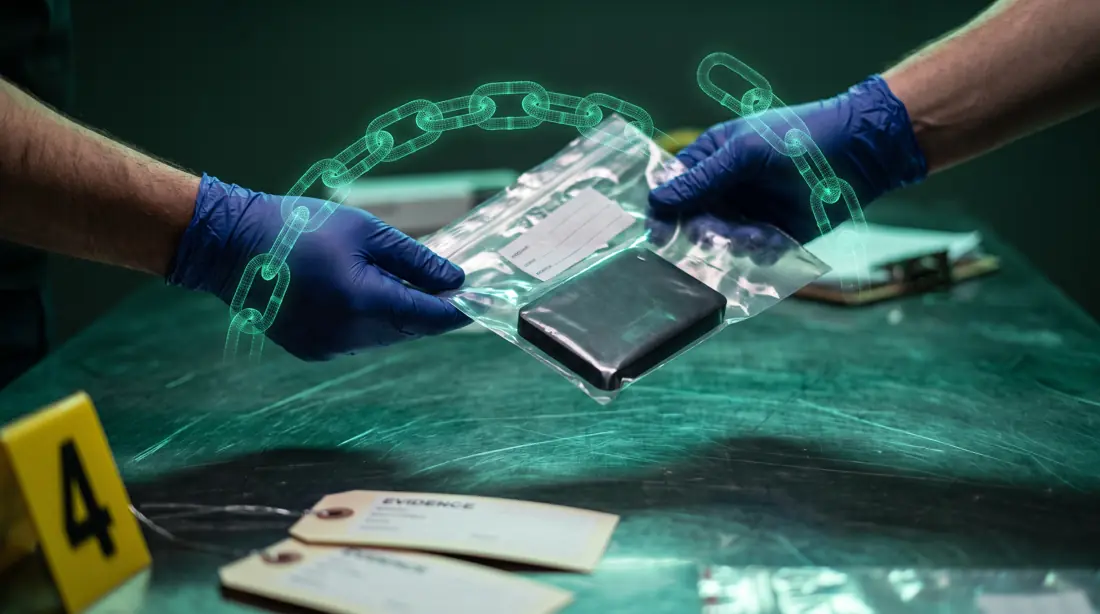
Log every handoff
Each transfer goes into an append-only log. Every record is sealed with a hash that includes the one before it.
-
 3Step 3 of 4
Flag problems automatically
A changed file, a handoff from the wrong person, a gap over 48 hours, or an edited record is flagged on its own.
-
 4Step 4 of 4
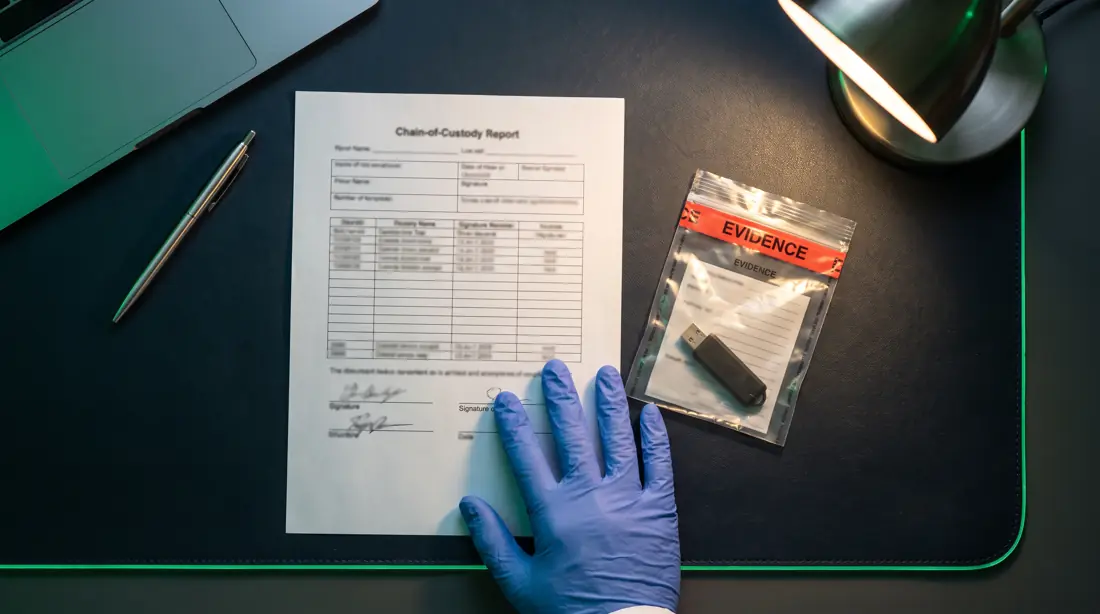
Print the custody report
One document per item with both fingerprints, every flag, the full custody history and signature lines. Producing it never writes to the log.
Five things it catches
Every item ends up clean, worth a review, or a problem.

- ProblemHASH_MISMATCH
The file no longer matches the fingerprint recorded at collection.
- ProblemBROKEN_CHAIN
A handoff came from someone the record says never held the item.
- ProblemLOG_TAMPERED
A custody record no longer matches its seal, so the log was changed outside the app.
- ReviewTIME_GAP
More than 48 hours passed between log entries with nothing recorded.
- ReviewUNVERIFIED
Nobody has re-checked the item since it was logged.
Run the simulation
Two parts. First, pick a seized device and make a verified copy of it. Then play the evidence handler and try to get away with something. Everything runs in your browser. Nothing you type is saved or sent anywhere.
- 1Acquire the evidencePick a device and make a verified copy
- 2Keep the chain of custodyHandle the evidence and try to cheat
Forensic training unit
Choose your evidence
A device was seized in case 2026-12-4. Pick one to examine. You will image it through a write blocker, prove the copy is exact, then take it through the chain of custody. These are sample devices with made-up contents.
Acquire the evidence
Investigators never work on the original. They copy it through a write blocker and prove the copy is exact. Real drives take hours. This takes a few seconds.
- 1Connect through a write blocker
Waiting...
- 2Copy every sector to an image file
Waiting...
- 3Hash the device and the imageFingerprint of the original deviceFingerprint of the image
Type your name
 Sample evidence
Portable hard drive
512 GB image, sample data
Evidence file
Edit it however you like: add a letter, delete one, or flip a single bit. The fingerprint check updates as you type.
Fingerprint check
Original fingerprint vs. the file right nowChanging a single bit scrambles almost every character. That is why a hash catches any edit.
Sign in with your name
Every entry in a custody log needs a person attached to it.
Take custody
The evidence is still with Nate Paige. Take it so the log records the handoff to you.
Optional: hand it to someone else
Try this before you take custody and the chain breaks (BROKEN_CHAIN).
Run the integrity check
Re-hashes the file and records the result under your name. The file is untouched, so this should PASS.
Optional: let time pass
Moves the demo clock ahead 72 hours. Entries more than 48 hours apart raise TIME_GAP.
Check it again
Now that the file has been changed, run the same check. This time it should FAIL with HASH_MISMATCH.
Try to cover it up
Try to change the failed record the normal way. The database refuses, because the log is append-only.
Go around the protection
Switch off the database protection and rewrite the record directly. The hash chain still catches it.
Print the custody report
Opens the report a court would see: both fingerprints, every flag and the full custody history.
Custody log
Every action above lands here. Each entry is sealed with a SHA-256 hash that includes the entry before it.
This is a simulation in your browser. The real tracker runs these checks on actual files and stores the log in SQLite, where database triggers block edits and deletes.